Key Takeaways
- Peak Heat Causes Peak Strain: Continuous operation during severe heatwaves forces HVAC units, compressors, and electrical systems to work overtime, increasing the risk of sudden mechanical failure.
- Mind the 4-Hour Food Rule: Power outages and brownouts become more common during extreme heat. According to the USDA, a closed refrigerator keeps food safe for only about four hours without power.
- Small Steps Prevent Big Losses: A simple 10-minute maintenance routine—like replacing air filters and clearing around outdoor AC units—plus understanding how your policy protects you, can save thousands in emergency repairs.
- Coverage That Fills the Gap: Equipment breakdown coverage helps pay to repair or replace covered home systems and appliances that fail due to internal mechanical or electrical breakdowns beyond normal wear and tear.
A sweltering summer day can be an endurance test for your home. As temperatures climb, air conditioners run for hours without a break, refrigerator compressors battle the surrounding heat, and neighborhoods place increased demand on the electrical grid.
Extreme heat can put extra strain on the system your home relies on every day. Before looking at practical ways to reduce that strain, it helps to understand what’s happening behind the scenes.
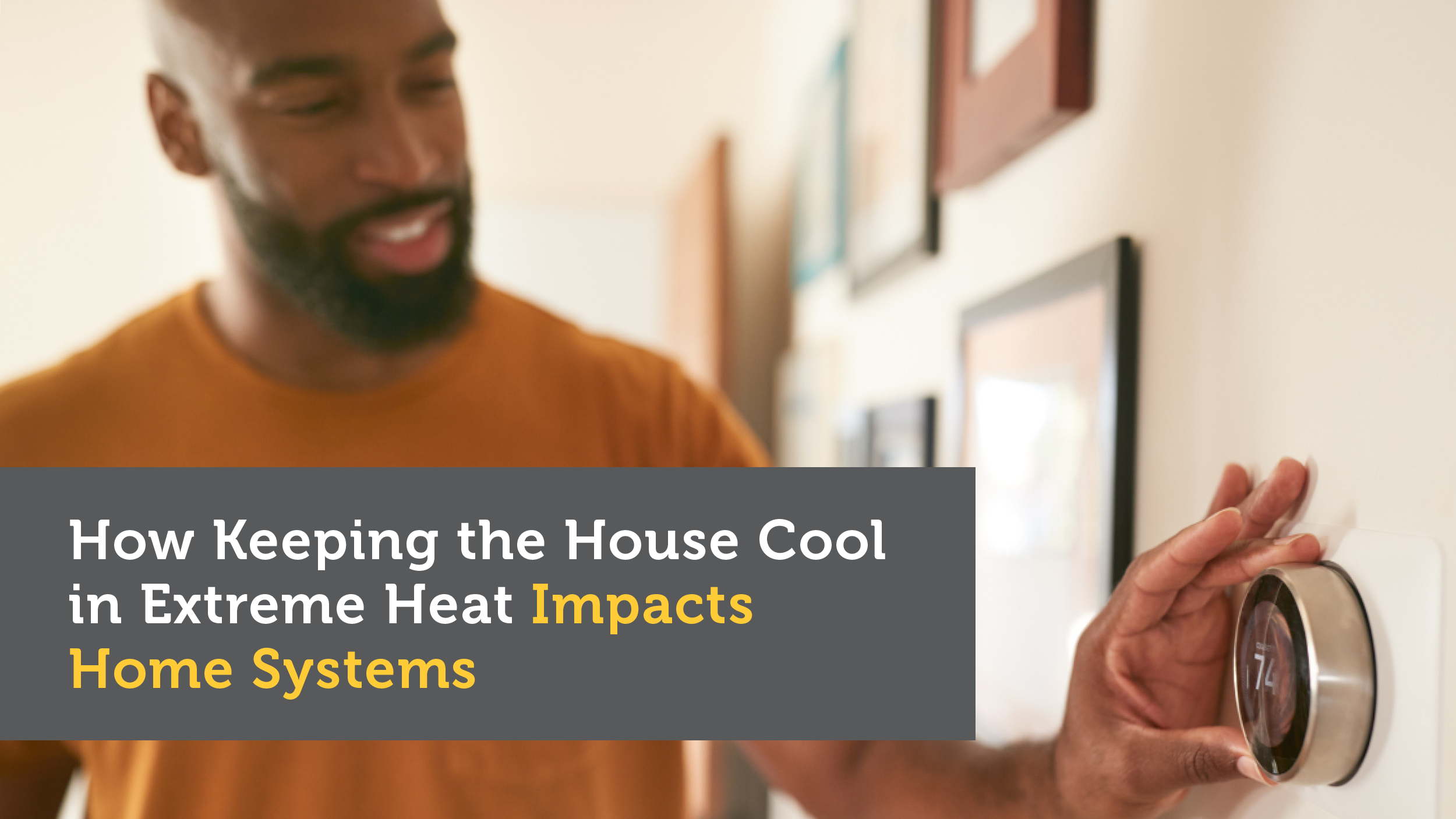
Why Keeping the House Cool in Extreme Heat Pushes Home Systems to Their Limit
While most homeowners expect their air conditioner to work harder on a hot day, many don’t realize that major home systems can be affected by prolonged extreme temperatures.
An air conditioning system designed to keep your home comfortable during an 85°F afternoon typically has capacity to spare. However, when outdoor temperatures hover in the upper 90s—or even exceed 100°F—the same system may run almost continuously while keeping the house cool in extreme heat.
Engineers often refer to this as “system strain,” a prolonged operation that generates additional heat, friction, and electrical demand inside mechanical components. That strain creates several hidden risks, including:
1. HVAC Component Burnout
When an air conditioner runs for hours without cycling off, critical internal components such as capacitors, blower motors, and compressors generate significant heat. Airflow restrictions, from something as simple as a dirty air filter or overgrown landscaping around the outdoor condenser, can force the system to work even harder. Over time, those conditions can lead to burnt-out motors, failed capacitors, or severe compressor damage.
Breakdowns rarely happen at a convenient time. During prolonged heat waves, HVAC contractors are often inundated with service calls, leaving homeowners waiting days for relief.
2. The “Thermal Creep” Trap: Why Your AC Can’t Keep Up
Have you ever set your thermostat to 70°F on a hot day only to watch the indoor temperature stall around 76°F? That doesn’t necessarily mean your air conditioner is failing. When keeping the house cool in extreme heat, even a properly functioning system can reach the limits of its design.
Most residential air conditioners are engineered to cool indoor air 15°F to 20°F below the outdoor temperature. If it’s 88°F outside, reaching a comfortable 68°F indoors is well within that range. However, if temperatures climb to 98°F, the same system may struggle to keep up. Lowering the thermostat to 62°F won’t make the air coming out of your vents any colder. Instead, it forces the system to run continuously, increasing wear on motors and other critical components without cooling your home any faster.

3. Grid Instability and Power Surges
Your home isn’t the only thing under pressure during a heat wave. When millions of households crank up their air conditioners simultaneously, electrical utilities experience enormous spikes in demand. Climate Central reports that weather-related power grid disruptions during the summer have increased significantly over the past decade, making localized brownouts and outages more common during periods of extreme heat.
When power is restored after an outage, the sudden surge of electricity can damage sensitive electronics and circuit boards inside modern appliances—including HVAC systems, refrigerators, smart thermostats, and other connected home devices. Unlike the gradual wear caused by heat, these electrical events can cause sudden failures with little warning.
How Smart Cooling Can Reduce HVAC Strain
Every summer, homeowners ask the same question: Should I raise the thermostat while I’m away, or does cooling the house back down use more energy than leaving it set to cool all day? The answer is surprisingly simple.
According to the U.S. Department of Energy, raising your thermostat by 7° to 10°F for about eight hours a day can reduce annual cooling costs by up to 10%. The smaller the difference between your indoor and outdoor temperatures, the more slowly heat leaks back into your home through the walls, windows, and doors. Your air conditioner doesn’t have to work as hard to maintain the temperature, reducing both energy use and wear on the system. Also, the energy required to cool your home back down later is typically less than the energy your air conditioner would have used running throughout the day.
Shutting your air conditioner off entirely during a heat wave may seem like an easy way to save money, but it often backfires. As your home heats up, walls, furniture, flooring, and other materials absorb and retain that heat while humidity rises. When you turn the system back on, it has to remove accumulated heat and excess moisture, which forces it to work much harder for a longer period.
Instead of making dramatic temperature swings, aim for a moderate setback of about 4° to 7°F while you’re away. For example, if you normally keep your home at 73°F, raising the thermostat to 77°F or 78°F during the workday is often enough to reduce energy use while keeping your equipment from working overtime.
Get insights like this right in your inbox. Subscribe to the Central Blog below.
Why Smart Thermostats Can Help
Investing in a smart thermostat can help your heating and cooling system work more efficiently. Rather than asking your air conditioner to immediately cool a hot house during the hottest part of the day, many smart thermostats gradually begin lowering the temperature before you get home. This approach can reduce unnecessary strain on your HVAC system while maintaining comfort.
Many models can also learn your schedule, make automatic temperature adjustments, and provide insights into your home’s energy use. As an added benefit, spreading cooling demand more evenly throughout the day helps reduce stress on the electrical grid during periods of extreme heat, reducing the risk of brownouts.

The Ripple Effect: Food Spoilage and Secondary Risks
Heat waves don’t just affect air conditioners—they can create a domino effect throughout your home and budget. During power outages or brownouts, refrigerators and freezers immediately begin losing their ability to keep food at safe temperatures.
Many homeowners also keep a second refrigerator or chest freezer in the garage, basement, or another unconditioned space. These appliances face even tougher conditions during heatwaves. Garage temperatures can easily climb well above 90°F on a hot day, forcing compressors to run continuously. Prolonged operation places additional mechanical stress on the appliance, increasing the likelihood of a breakdown.
According to the USDA, a closed refrigerator will keep food safely chilled for approximately four hours during a power outage, while a full freezer can typically maintain a safe temperature for up to 48 hours. Perishable foods that remain above 40°F for more than two hours should be discarded to reduce the risk of foodborne illness. “When in doubt, throw it out,” the CDC cautions.
What’s the true cost of a power outage? The average family stores hundreds of dollars’ worth of food in their refrigerator, while households with a stocked chest freezer risk even greater losses during a power outage. A single extended summer power outage can wipe out half a month’s grocery budget in one afternoon.

The 10-Minute Maintenance Checklist to Protect Your Home
You can’t control the weather, but you can reduce the strain it places on your home’s essential systems. Taking these quick steps helps protect your HVAC system and appliances:
- Replace your air filter (2 minutes): A clean filter restores airflow, helping your blower motor move air more efficiently and reducing unnecessary strain on the system.
- Clear around your outdoor condenser (3 minutes): Trim grass, weeds, and shrubs so the unit has at least two feet of clearance on all sides, allowing heat to dissipate properly.
- Review your thermostat schedule (1 minute): Program moderate temperature setbacks instead of dramatic swings to avoid forcing your air conditioner to play catch-up during peak hours.
- Protect electronics from power surges (2 minutes): Plug computers, home office equipment, entertainment systems, and smart appliances into quality surge protectors.
- Check refrigerator and freezer door seals (1 minute): Worn or loose gaskets allow cold air to escape, forcing compressors to work harder.
- Listen for warning signs (1 minute): Buzzing, rattling, squealing, or clunking noises may indicate mechanical problems. Catching issues early prevents expensive repairs later.
Want more seasonal maintenance advice? Read our blog post on Summer Home Maintenance Tips for additional ways to keep your home running smoothly all season long.

Even Well-Maintained Systems Have Their Limits When Keeping the House Cool in Extreme Heat
Regular maintenance goes a long way toward reducing strain on your home’s equipment, but no system lasts forever. Mechanical parts wear out, electrical components fail, and prolonged heat can push even well-maintained appliances beyond their limits. Many homeowners assume their standard homeowners policy will cover an air conditioner or refrigerator that breaks down during extreme heat.
Traditional homeowners insurance is designed primarily to cover sudden, accidental damage caused by external events such as fire, wind, hail, or lightning. It typically doesn’t cover an air conditioner or refrigerator that experiences an internal mechanical or electrical breakdown. Standalone home warranties can help with certain repairs, but they often come with service fees, coverage limits, exclusions, and lengthy repair delays.
Equipment breakdown coverage can help fill that gap by covering eligible repairs or replacement for covered systems and appliances.
Equipment Breakdown Coverage
Equipment breakdown coverage is designed to help protect homeowners when covered equipment experiences an internal mechanical or electrical breakdown beyond normal wear and tear. It complements your homeowners policy by helping cover the repair or replacement of major systems and appliances.

When a major home system fails, the last thing most homeowners want is to worry about an unexpected repair bill while trying to keep the house cool in extreme heat. Equipment Breakdown Coverage provides peace of mind when unexpected mechanical or electrical failures occur.
When Home Systems Fail, Equipment Breakdown Coverage Can Help
At Central, we believe protecting your home means helping you prepare before problems happen and being there when they do. Our equipment breakdown coverage is an affordable way to bridge the gap between traditional homeowners insurance and the cost of unexpected mechanical failures. If a covered breakdown occurs, our claims team works quickly to help you navigate the process and get your home back up and running after a covered loss.
You can report a claim in minutes through the myCentral app and receive real-time status updates by text, making it easier to stay informed throughout the process. Even the best-maintained systems can fail, so take a few minutes to review your homeowners policy.
Contact a Central agent to learn more about your current coverage and how equipment breakdown coverage can better protect your home.

The information provided in this blog is for informational and educational purposes only and does not constitute legal, insurance, or other professional advice. It is not intended to interpret or modify any insurance policy. Coverage may vary based on individual circumstances, policy language, endorsements, exclusions, and applicable state law.
All descriptions, summaries, or examples are general in nature and may not reflect your specific policy or coverage. No guarantee is given regarding the accuracy, completeness, or timeliness of the information. Your policy contract governs, and you should review it in its entirety to understand your actual coverage.
Nothing in this content creates a broker, agent, or advisory relationship, and you should consult your insurance professional for advice specific to your needs.
Products underwritten by Central Insurance and affiliated companies.
Copyright © 2026 Central Insurance. All rights reserved.